Micronutrients and Fats
🧈 The Great Fat Debate: Saturated vs. Unsaturated + Starch & Micronutrients Explained! 🥑
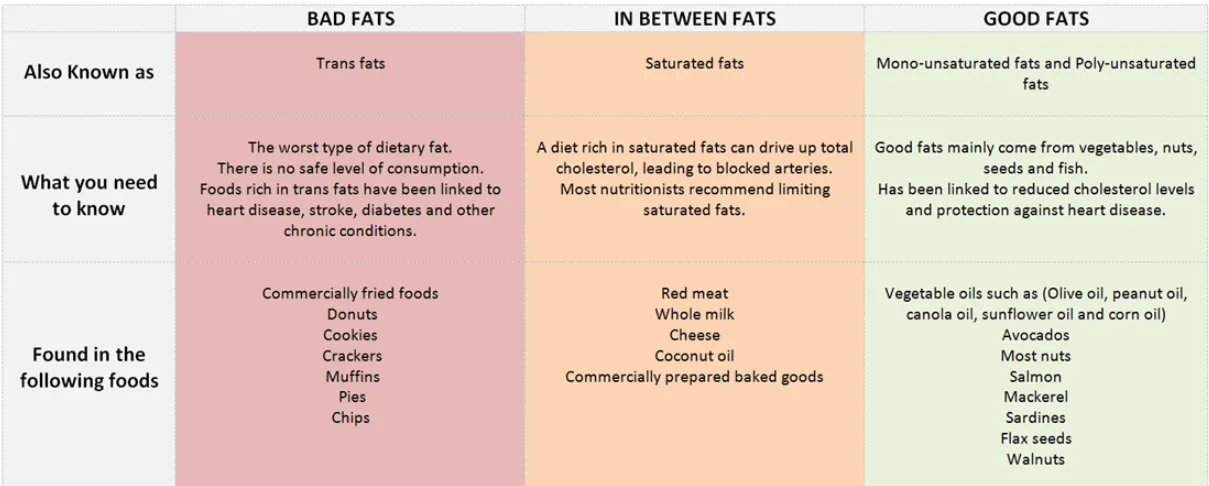
Let's dive deeper into the world of nutrition and uncover the truth about fats, starch, and those tiny-but-mighty micronutrients! Get ready for some science-backed knowledge! 🔬✨
🧈 The Fat Face-Off: Saturated vs. Unsaturated
What Makes Them Different? 🤔
The difference comes down to chemistry (don't worry, I'll keep it simple!):
Saturated Fat 🥥🧈
Chemical Structure:
- "Saturated" with hydrogen atoms
- No double bonds between carbon atoms
- Packed tightly together like soldiers in formation 🪖
Physical Properties:
- Solid at room temperature (think: butter, coconut oil, lard)
- Very stable—doesn't oxidize easily
- Long shelf life
Found in:
- Red meat (beef, lamb, pork) 🥩
- Full-fat dairy (butter, cream, cheese) 🧀
- Coconut oil and palm oil 🥥
- Dark chocolate 🍫
- Processed meats (bacon, sausage)
What it does in your body:
- Raises LDL cholesterol (the "bad" cholesterol) 📈
- But also raises HDL cholesterol (the "good" cholesterol) 📊
- Supports hormone production (especially testosterone and estrogen)
- Provides stable energy
- Important for cell membrane structure
Unsaturated Fat 🥑🫒
Chemical Structure:
- NOT saturated with hydrogen
- Contains one or more double bonds
- More loosely arranged (like dancers with space to move! 💃)
Physical Properties:
- Liquid at room temperature (think: olive oil, fish oil)
- Less stable—can oxidize when exposed to heat/light
- Needs careful storage
Two Types:
1. Monounsaturated Fats (MUFAs) ❤️
- ONE double bond
- Found in:
- Olive oil 🫒
- Avocados 🥑
- Almonds, cashews, pecans 🥜
- Peanut butter
2. Polyunsaturated Fats (PUFAs) 💙
- MULTIPLE double bonds
- Includes essential Omega-3 and Omega-6 fatty acids
- Found in:
- Fatty fish (salmon, mackerel, sardines) 🐟
- Walnuts
- Flaxseeds and chia seeds
- Sunflower seeds
- Soybean and corn oil
What they do in your body:
- Lower LDL cholesterol (bad cholesterol) 📉
- Raise HDL cholesterol (good cholesterol) 📈
- Reduce inflammation 🔥➡️❄️
- Support brain health and function 🧠
- Protect heart health ❤️
🏆 Which Fat is Better? The Verdict!
The Modern Scientific Consensus 📚
According to research from Harvard's Nutrition Source, the answer is nuanced:
🥇 Winner: Unsaturated Fats (especially polyunsaturated)
Why?
- Actively improve your cholesterol profile
- Reduce risk of heart disease and stroke
- Provide essential fatty acids your body can't make
- Support brain health and reduce inflammation
- Associated with better overall health outcomes
The Science: Replacing saturated fat with polyunsaturated fat lowers "bad" LDL cholesterol and improves the ratio of total cholesterol to "good" HDL cholesterol, significantly reducing heart disease risk! 💪
🥈 Second Place: Saturated Fats (in moderation!)
The Modern Take: Saturated fat isn't the villain it was painted to be in the 1980s-90s! Current evidence shows:
✅ The good news:
- Essential for hormone production
- Supports vitamin absorption
- Provides stable cooking oil (coconut oil)
- Fine in moderate amounts (under 10% of daily calories)
⚠️ The caution:
- Can raise LDL cholesterol when consumed in excess
- Best to limit, not eliminate
- Quality matters—grass-fed butter vs. processed meat fat!
🚫 Dead Last: Trans Fats (Avoid at ALL costs! ❌)
- Artificially created through hydrogenation
- Found in: margarine, shortening, many processed baked goods
- Raises bad cholesterol AND lowers good cholesterol—the worst of both worlds!
- Being phased out worldwide (banned in many countries) 🛑
🎯 The Optimal Fat Strategy
Your Daily Fat Intake Should Look Like This:
🟢 70-80% Unsaturated Fats
- Emphasis on omega-3s (fatty fish, walnuts, flaxseeds)
- Liberal use of olive oil and avocados
- Nuts and seeds daily
🟡 20-30% Saturated Fats
- Small amounts of grass-fed butter
- Quality meat in moderation
- Full-fat dairy if tolerated
🔴 0% Trans Fats
- Read labels carefully!
- Avoid "partially hydrogenated oils"
According to Heart and Stroke Foundation, choosing healthier unsaturated fats while limiting saturated fats helps maintain healthy cholesterol levels and reduces risk of cardiovascular disease! 🫀
🌾 What About Starch? Let's Break It Down!
What IS Starch? 🤷
Starch is a complex carbohydrate made up of long chains of glucose molecules bound together. Think of it as glucose on a string of pearls! 📿
Chemical makeup:
- Amylose (straight chains)
- Amylopectin (branched chains)
- Both must be broken down into glucose for absorption
Where You'll Find Starch 🔍
High-starch foods:
- Potatoes 🥔 (white, sweet, purple)
- Rice 🍚 (white, brown, wild)
- Pasta 🍝
- Bread 🍞
- Corn 🌽
- Oats
- Legumes (beans, lentils, peas)
- Quinoa
- Wheat products
Starch vs. Sugar: What's the Difference? ⚖️
| Starch | Sugar |
|---|---|
| Complex carbohydrate | Simple carbohydrate |
| Long glucose chains | Short molecules (1-2 units) |
| Slower digestion ⏰ | Rapid digestion ⚡ |
| Gradual energy release | Quick energy spike |
| Found in grains, potatoes | Found in fruits, sweets |
Types of Starch 📊
1. Rapidly Digestible Starch
- Breaks down quickly
- Found in: white bread, white rice, instant oatmeal
- Higher glycemic impact
2. Slowly Digestible Starch ✅
- Takes time to break down
- Found in: whole grains, al dente pasta, legumes
- Better blood sugar control!
3. Resistant Starch 🌟 (The BEST kind!)
- Resists digestion like fiber!
- Acts as a prebiotic (feeds good gut bacteria)
- Found in: cooked & cooled potatoes/rice, green bananas, legumes
- Pro tip: Cook rice or potatoes, refrigerate overnight, then reheat—creates resistant starch! 🧊
Why Starch Matters 💡
The Good:
- Provides sustained energy for brain and muscles
- Whole grain starches contain B vitamins, minerals, and fiber
- Resistant starch supports gut health
- Essential fuel for athletes and active people
The Watch-Out:
- Refined starches (white bread, pastries) spike blood sugar
- Can contribute to weight gain if overeaten
- Best consumed earlier in the day when you need energy!
💎 Micronutrients: The Tiny Nutritional Powerhouses!
You've mastered macros—now meet the micros! These are needed in smaller amounts but are JUST as important! ⚡
What Are Micronutrients? 🔬
Vitamins and minerals required in small quantities (milligrams or micrograms) but essential for:
- Energy production
- Immune function
- Bone health
- Cell repair
- Enzyme function
- Hormone regulation
Unlike macronutrients, micronutrients provide ZERO calories—but without them, your body can't function! 🚨
🌈 The Essential Vitamins
Fat-Soluble Vitamins (Stored in body fat)
Vitamin A 🥕
- Function: Vision, immune function, skin health
- Sources: Carrots, sweet potatoes, spinach, liver
- Deficiency: Night blindness, dry skin, weak immunity
Vitamin D ☀️
- Function: Calcium absorption, bone health, immune function, mood
- Sources: Sunlight (!), fatty fish, fortified milk, egg yolks
- Deficiency: Weak bones, depression, frequent illness
- Note: Many people are deficient—consider supplementation!
Vitamin E 🥜
- Function: Antioxidant protection, skin health, immune function
- Sources: Nuts, seeds, spinach, avocados
- Deficiency: Muscle weakness, nerve damage (rare)
Vitamin K 🥬
- Function: Blood clotting, bone metabolism
- Sources: Leafy greens (kale, spinach, broccoli)
- Deficiency: Easy bruising, bleeding
Water-Soluble Vitamins (Not stored; need daily replenishment)
Vitamin C 🍊
- Function: Collagen production, immune support, antioxidant
- Sources: Citrus fruits, bell peppers, strawberries, broccoli
- Deficiency: Scurvy, poor wound healing, bleeding gums
B-Complex Vitamins (8 different B vitamins!)
B1 (Thiamine) 🌾
- Energy metabolism
- Sources: Whole grains, pork, legumes
B2 (Riboflavin) 🥛
- Energy production, cell function
- Sources: Dairy, eggs, almonds, mushrooms
B3 (Niacin) 🥜
- DNA repair, metabolism
- Sources: Chicken, tuna, peanuts
B6 (Pyridoxine) 🐔
- Amino acid metabolism, neurotransmitter synthesis
- Sources: Poultry, fish, chickpeas, bananas
B9 (Folate) 🥬
- Cell division, DNA synthesis, crucial in pregnancy!
- Sources: Leafy greens, legumes, avocados
B12 (Cobalamin) 🥩
- Nerve function, red blood cell formation
- Sources: ONLY animal products (meat, fish, dairy, eggs)
- Vegans MUST supplement! 🌱💊
⚡ The Essential Minerals
Macro-Minerals (Needed in larger amounts)
Calcium 🦴
- Function: Bone health, muscle contraction, nerve signaling
- Sources: Dairy, leafy greens, sardines, fortified plant milk
- Daily need: 1000-1200mg
- Pairs with: Vitamin D for absorption!
Magnesium 🧘
- Function: 300+ enzyme reactions, muscle relaxation, sleep, mood
- Sources: Dark leafy greens, nuts, seeds, dark chocolate, avocados
- Daily need: 300-400mg
- Many people are deficient! Symptoms: muscle cramps, poor sleep, anxiety
Potassium 🍌
- Function: Fluid balance, blood pressure regulation, muscle function
- Sources: Bananas, potatoes, spinach, avocados, beans
- Daily need: 3000-4000mg
- Balances sodium!
Sodium 🧂
- Function: Fluid balance, nerve function
- Sources: Salt, processed foods (often too much!)
- Watch out: Most people get TOO much sodium!
Phosphorus 🥛
- Function: Bone health, energy production (ATP!)
- Sources: Dairy, meat, nuts, whole grains
Trace Minerals (Needed in tiny amounts but critical!)
Iron 💪
- Function: Oxygen transport (hemoglobin), energy production
- Sources: Red meat (heme iron), spinach, lentils (non-heme iron)
- Note: Women need more due to menstruation
- Pair with vitamin C for better absorption!
Zinc 🛡️
- Function: Immune function, wound healing, protein synthesis
- Sources: Oysters, beef, pumpkin seeds, chickpeas
- Deficiency: Frequent colds, slow healing, hair loss
Selenium 🌰
- Function: Antioxidant, thyroid function
- Sources: Brazil nuts (just 2-3 daily!), seafood, eggs
- Caution: Don't overdo it—toxic in high amounts
Iodine 🧂
- Function: Thyroid hormone production
- Sources: Iodized salt, seaweed, seafood, dairy
- Deficiency: Thyroid problems, goiter
🎨 How to Get All Your Micronutrients
The Rainbow Strategy 🌈
Eat a variety of colors daily:
🔴 Red: Tomatoes, strawberries, red peppers (Vitamin C, lycopene) 🟠 Orange: Carrots, sweet potatoes, oranges (Vitamin A, C) 🟡 Yellow: Bananas, yellow peppers, pineapple (Potassium, Vitamin C) 🟢 Green: Spinach, broccoli, kale (Calcium, Iron, Vitamins K, C, A) 🔵 Blue/Purple: Blueberries, eggplant, purple cabbage (Antioxidants) 🟤 Brown/Tan: Whole grains, nuts, mushrooms (B vitamins, minerals)
Micronutrient Timing ⏰
Good news: Unlike macros, micronutrient timing doesn't matter much!
✅ Best practice:
- Spread variety throughout the day
- Take fat-soluble vitamins (A, D, E, K) with meals containing fat
- Iron supplements on empty stomach (unless stomach upset)
- Calcium and iron compete—don't take together
- B vitamins in morning (can be energizing!)
🥗 Putting It All Together: Your Nutrition Blueprint
1. Fats 🥑
- Prioritize unsaturated (especially omega-3s)
- Limit saturated to ~10% of calories
- AVOID trans fats completely
- Use olive oil as primary cooking oil
2. Starches 🌾
- Choose whole grains over refined
- Try creating resistant starch (cook & cool method)
- Pair with protein and fat to slow digestion
- Time around activity for best energy
3. Micronutrients 💎
- Eat the rainbow daily
- Focus on whole foods (most nutrient-dense!)
- Consider a quality multivitamin as "insurance"
- Get blood work to check for deficiencies (Vitamin D, B12, Iron, Magnesium)
🎯 Final Takeaways
✨ Not all fats are created equal — unsaturated fats are your best friends! ✨ Starch is just glucose in disguise — choose wisely (whole > refined) ✨ Micronutrients don't have calories — but they're essential for life! ✨ Variety is the key — eat different whole foods daily ✨ Quality matters — whole foods over supplements when possible!
Remember: You're not just eating calories—you're feeding every cell in your body! 🌟
Fuel wisely, live vibrantly! 💪🌈✨