How I Cheat Learning Cantonese
How I Cheat Learning Chinese
When I first came to Hong Kong, I noticed everyone around me spoke a language that was not Mandarin, yet sounded very Chinese. I am a native Chinese speaker. Chinese itself is a very broad term for this language group, where we use Chinese characters to represent words. For me, I speak fluent B1 潮州話 (Teochew) and B2 客家話 (Hakka). By fluent, grammar-wise it's flawless, vocab-wise, not so. But I understand tone, and I can produce every consonant and vowel that is available in both of those so-called dialects. (Or should we say, language?)
Let's Talk about Teochew
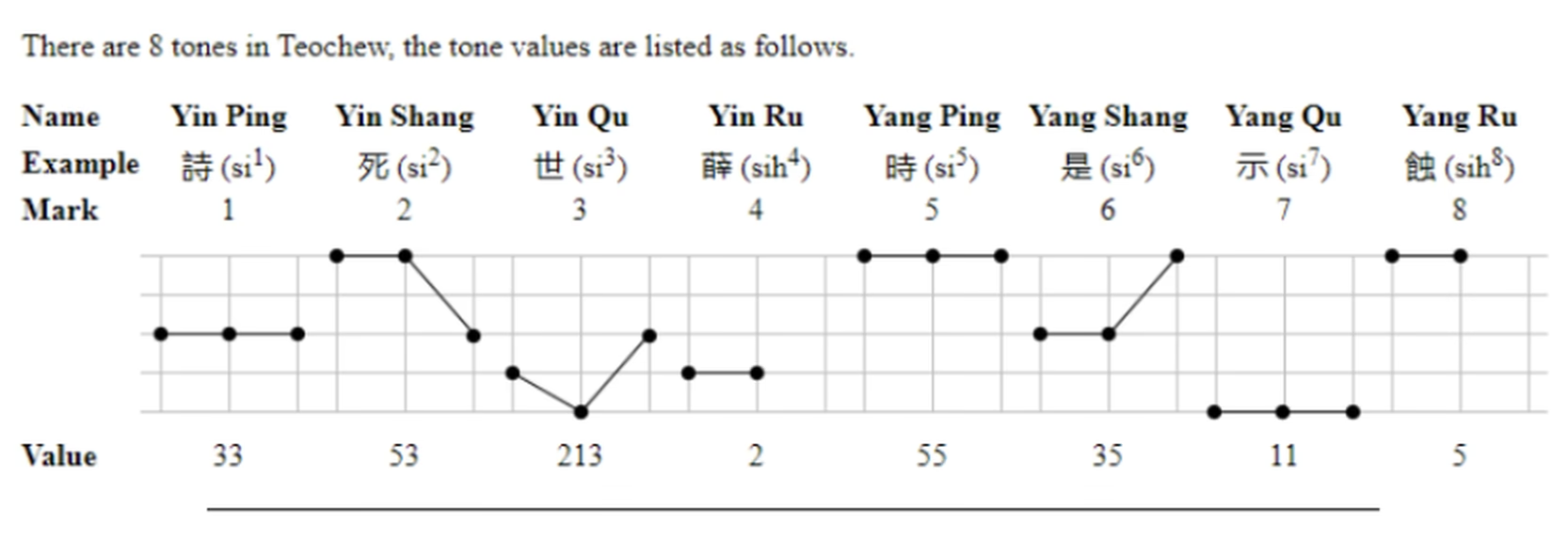
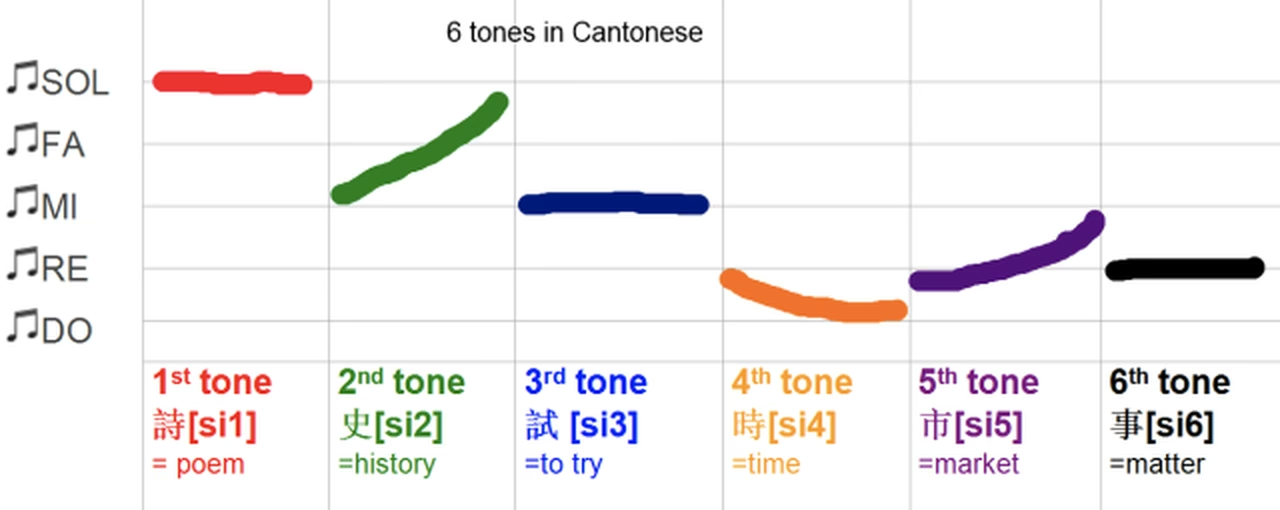
The tone mapping from Pengim to Jyutping that I should know is
- Tone 5 → Tone 1
- Tone 6 → Tone 2
- Tone 1 / Tone 4 → Tone 3
- Tone 3 → Tone 4
- Tone 5 in Cantonese, surprisingly, has no equivalent lol (I'm actually struggling to distinguish this from tone 2 in Cantonese too).
- Tone 7 → Tone 6
In Teochew, I am able to pronounce these words:
-
to1 刀 = knife 🔪, kau1 鉤 = hook 🪝, ke1 家 = family 👨👩👧👦, theung1 湯 = soup, broth 🍲, ceng1 盅 = cup ☕
-
to2 短 = short 📏, kau2 狗 = dog 🐶, ke2 假 = fake, false 🎭, tiam2 點 = dot, point •, ceng2 腫 = swollen 🤕
-
to3 倒 = to pour 🫗, kau3 夠 = enough, sufficient ✅, ke3 價 = price 💰, chai3 菜 = vegetable 🥬, ceng3 種 = to plant, to grow
-
tok4 斫 = to cut ✂️, sek4 色 = color 🎨, hueh4 血 = blood 🩸, chit4 七 = number seven 7️⃣, peh4 百 = hundred, one hundred 💯
-
kau5 猴 = monkey 🐒, theung5 糖 = sugar 🍬, tiam5 甜 = sweet 🍯, me5 夜 = night 🌙, lau5 樓 = floor / level of a building 🏢
-
to6 在 = to be, to exist, to be at 📍, kau6 厚 = thick 📚, ke6 低 = low ⬇️, lau6 老 = old 👴, ngou6 五 = number five 5️⃣
-
to7 袋 = bag, pocket 🛍️, lau7 漏 = to leak 💧, seu7 事 = matter, issue, affair ⚠️, me7 罵 = to scold 😠, peung7 飯 = rice, cooked rice 🍚
-
lak8 六 = number six 6️⃣, cap8 十 = number ten 🔟, sek8 熟 = ripe, cooked 🍳, cek8 蜀 = number one 1️⃣, peh8 白 = white ⚪
Crazy thing is, the consonants and finals, all of them are available consonants in Teochew, except for this one cursed "œ" vowel. But this is available in French—As a person who likes to impersonate French people, I'm able to pronounce it.